Machine Downtime Monitoring
Modern facilities generate a massive amount of operational data through building management systems (BMS), industrial controllers, and IoT devices. Protocols like BACnet and Modbus continuously collect data from HVAC systems, power meters, sensors, and other critical equipment.
But the real question for facility managers is: What actually prevents downtime — dashboards or alerts?
While dashboards provide visibility, alerts deliver action. The most effective monitoring strategies combine both, but alerts are often what make the real difference when something goes wrong.
The Role of Dashboards
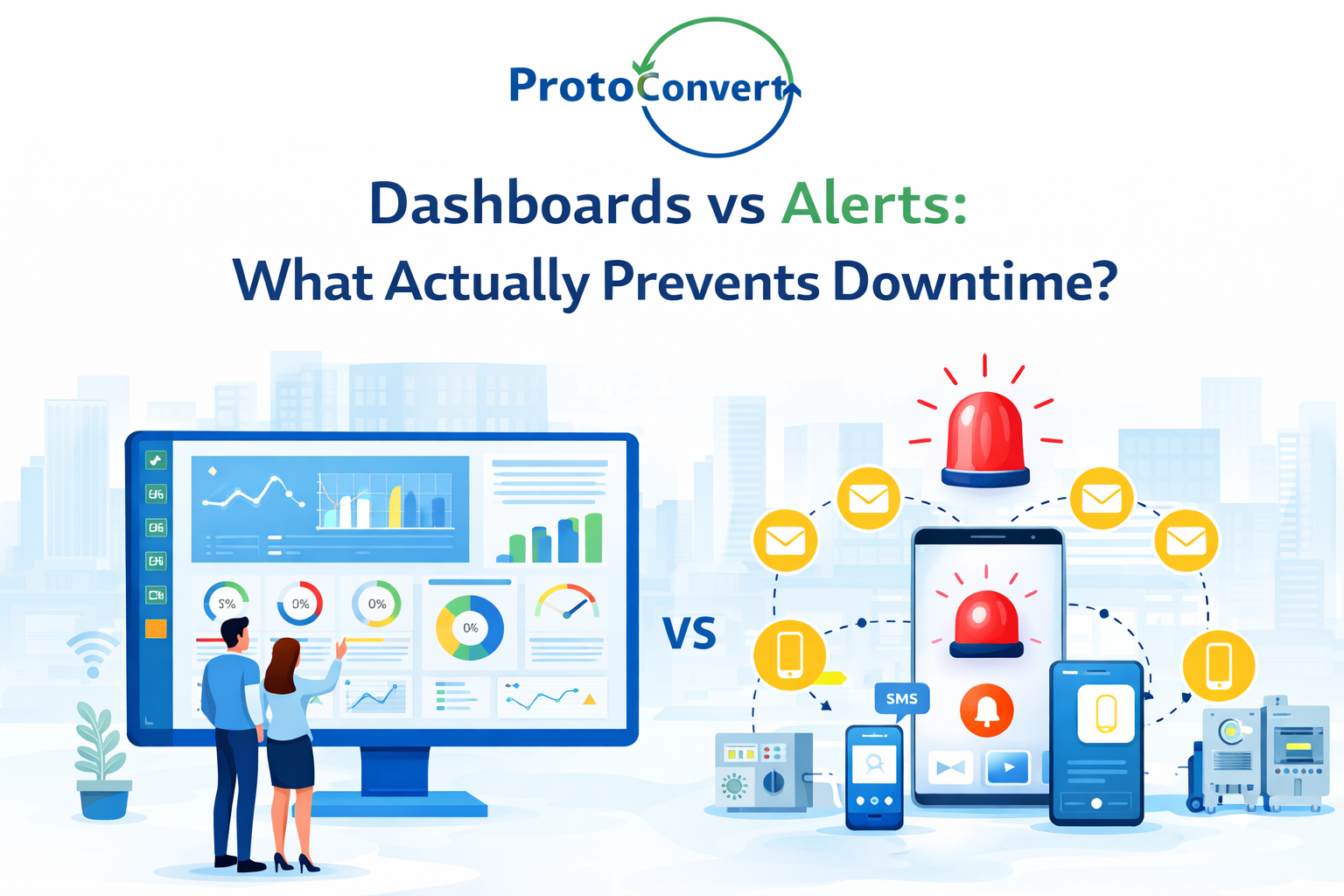
Dashboards are designed to visualize system performance in real time. They allow facility managers to monitor multiple parameters in one place, such as:
- Temperature and humidity levels
- Energy consumption
- Equipment status
- Network connectivity
- Alarm history
A well-designed dashboard helps teams identify trends and optimize operations. For example, a gradual rise in motor temperature or abnormal energy usage can indicate an emerging issue.
However, dashboards rely on one key factor: someone must be actively watching them.
In large facilities where thousands of data points are being monitored, constantly watching dashboards is not always practical.
The Power of Alerts
Alerts are designed to notify the right person at the right time when something goes outside normal operating conditions.
Instead of waiting for someone to notice an issue on a dashboard, alerts can trigger automatically through channels such as:
- SMS notifications
- Email alerts
- Mobile push notifications
- API integrations with ticketing systems
This ensures that critical events never go unnoticed, even outside working hours.
For example:
- A chiller failure can trigger an instant SMS to maintenance staff.
- Power consumption exceeding a threshold can notify facility managers.
- A communication failure from a Modbus device can escalate to IT teams.
Why Alerts Prevent Downtime Faster
The main advantage of alerts is speed of response.
Dashboards help diagnose problems, but alerts ensure someone is immediately aware of the issue. This early detection allows teams to respond before minor faults turn into costly downtime.
Advanced alert systems also include escalation logic, where alerts move to the next responsible person if the first recipient does not respond. This prevents critical alarms from being ignored.
The Best Approach: Dashboards + Intelligent Alerts
Dashboards and alerts are not competitors — they are complementary tools.
- Dashboards provide insights and long-term operational visibility.
- Alerts enable rapid response to critical issues.
By integrating legacy BACnet and Modbus systems with modern technologies like MQTT, SMS gateways, and REST APIs, facilities can create a smart monitoring ecosystem where dashboards provide oversight and alerts ensure immediate action.
Conclusion
Machine Downtime Monitoring – When it comes to preventing downtime, alerts are the frontline defense, while dashboards provide the deeper operational context.
Organizations that combine real-time alerts with powerful dashboards gain the ability to detect issues early, respond faster, and maintain continuous operations.
With solutions like ProtoConvert, facility managers can bridge traditional automation systems with modern alerting and monitoring platforms — ensuring that critical events never go unnoticed.